
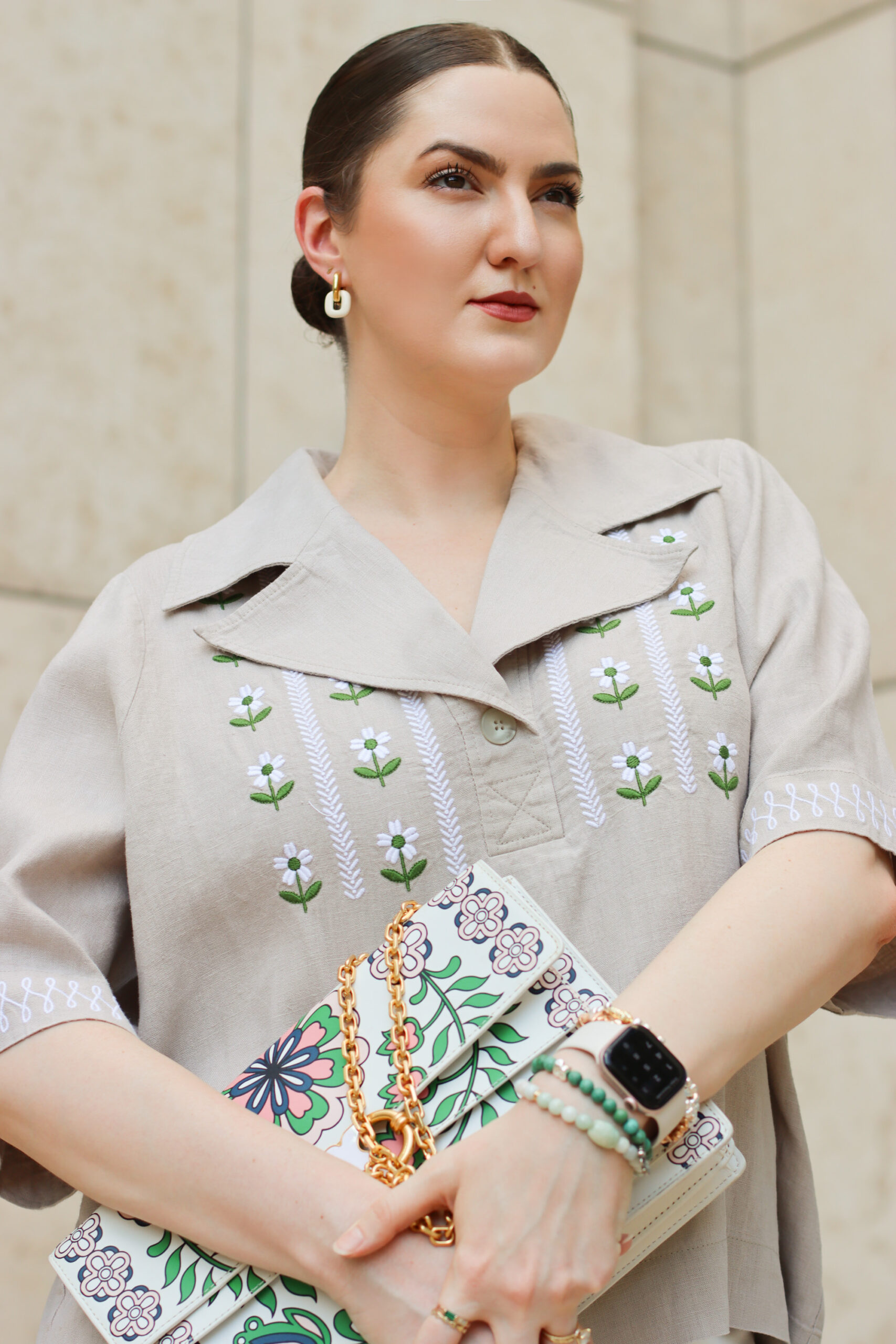
Etnodim on top, the Lace UA on the bottom, nothing unexpected here, so let’s get straight into the practicality of it all: researching, selection, placing orders and getting deliveries from Ukrainian brands. Ordering directly from Ukraine takes a little more planning than clicking “Buy Now” on a global retailer, but it’s absolutely worth it. You’ll end up with something far more unique than whatever the algorithm decided everyone should own this week – and your purchase directly supports the designers, artisans and businesses keeping Ukraine’s creative industry moving forward.


Most Ukrainian fashion brands sell directly through websites ending in .ua or .com.ua. The .ua ending is Ukraine’s official country-code domain, but treat it as one useful signal rather than automatic proof that every shop using it is legitimate.
Before ordering, look for the basics: an About page, working contact information, clear product measurements and shipping or return policies. I also check whether the brand has an active Instagram account, how long it has been posting and what customers are saying in the comments.
An established social presence does not guarantee a flawless experience, but it helps confirm there are real people, products and customers behind the website – extra research will always give you peace of mind the brand is real and operational, and not a spoof or a scam trying to capitalize. Obvi, all brands linked on my blog are safe to shop.
Some Ukrainian websites include an English toggle directly in the menu, and a few also let you switch prices from UAH into USD or EUR. The COAT, for example, currently offers Ukrainian and English versions alongside UAH, USD and EUR display options.
When there is no language toggle, Chrome can translate the full page. On desktop, right-click anywhere and select Translate to English – or your preferred language. On mobile, open the browser menu and select Translate. You can also paste individual sentences into Google Translate when a product description or policy sounds confusing after automatic translation.
Instagram usually offers “See translation” beneath eligible captions, comments and profile bios. This is especially helpful because many smaller Ukrainian brands use Instagram for new releases, size advice and customer service even when their website is fairly minimal.
International returns are complicated, expensive and sometimes not practical at all, so sizing deserves more attention than usual. Do not assume a Ukrainian XS, S or M will match the same size from a US, UK, European or Asian retailer.
Look for the size chart on the product page and compare your actual measurements in centimeters. Check whether the chart lists body measurements, garment measurements or both. For oversized clothing, fitted corsets, tailored jackets and shoes, email or message the brand with your measurements and ask what size the team recommends.
This is also the time to confirm whether the item is ready to ship or made to order or available for pre-order. A product that requires several days or weeks of production will naturally take longer than something already sitting in the brand’s stockroom.

Checkout forms on Ukrainian websites may arrange address fields differently from the format you normally use. You may see separate fields in an order such as:
Enter the information using the Latin alphabet unless the brand specifically tells you otherwise. Write your full name exactly as it appears on your ID, include your international country code in the phone number and double-check the postal code before paying. International carriers require accurate recipient details, including your name, address and contact information, and may use your email or phone number to contact you about customs, duties or delivery – so do not use a throwaway inbox you never check.
When a checkout form does not accept your address correctly, stop and contact the brand rather than forcing information into the wrong fields. Most brands offer some combination of email, Instagram Direct, WhatsApp or Telegram support – CHER’17 lists several direct contact options, while the COAT offers email, phone and WhatsApp support. In my experience, Ukrainian customer service teams are usually very willing to help complete an international order – I have received a response every single time from every brand I have bought from.
Prices may appear in UAH, the abbreviation for Ukrainian hryvnia. For a quick estimate, Google the total followed by “UAH to USD,” “UAH to EUR” or your local currency, or check the National Bank of Ukraine’s official exchange rates. Treat that number as an estimate – the final total on your statement may differ slightly because your card issuer applies its own exchange rate and may charge a foreign transaction fee. You can also compare the approximate card conversion using the official Visa or Mastercard exchange-rate calculator.
Visa and Mastercard are widely accepted by established Ukrainian fashion sites and are usually the best cards to try first. Apple Pay and Google Pay or local Ukrainian payment processors such as LiqPay may also appear, depending on the retailer. Before buying, check whether your particular card charges foreign transaction fees – I pay minor transaction fees on every order.
When the website offers a choice between paying in UAH and paying in your home currency, compare the totals before selecting one. Paying in your own currency through dynamic currency conversion can include an additional conversion markup, while your card issuer may offer a better rate when the transaction remains in UAH. The final choice depends on your card and its fees, so check the numbers rather than automatically choosing the most familiar currency.
Not every order follows a standard add-to-cart checkout. Some smaller brands may confirm availability manually, calculate international shipping after receiving your address and email you a separate payment link or invoice – LiqPay, for example, allows merchants to send an invoice with a payment button directly by email. That is not automatically suspicious, but make sure the message comes from the brand’s official email or verified social account before paying.
On this blog, we talk about ethical fashion, brands and trends transforming the industry and we also support Ukraine – quick break to donate $5!
NGO dedicated to strengthening the country’s defense forces through equipment, training, analytics, and veteran support.

International fashion orders continue to leave Ukraine through services including Nova Post and Nova Global, Ukrposhta and DHL Express. Nova Global manages cross-border delivery and customs services across more than 160 countries and territories, while individual brands choose the carriers, delivery methods and destinations that make sense for their operations.
The brand usually prepares the item, completes the required shipping and customs documents and hands the parcel to its Ukrainian carrier. Depending on the service and destination, the package may travel through European transit points before being transferred to DHL, UPS, a national postal operator or another local delivery partner for the final portion of the trip. Nova Global, for example, manages the process through first-mile collection, customs clearance, international transportation and last-mile delivery, while Ukrposhta works with 192 national postal operators worldwide.
That handoff can make tracking look confusing. You may initially receive a Nova Post or Ukrposhta tracking number and later see a second number from the final carrier. Follow the parcel through the official Nova Post tracking system or Ukrposhta international tracker, and save every shipping email until the package is safely in your hands.
There is no universal delivery timeline. The COAT currently lists international delivery through Nova Poshta Global and DHL Express, with estimates varying by service – approximately 5–7 business days through Nova Poshta Global and 7–14 business days through DHL. JUL lists approximately 5–14 days through Nova Poshta and 20–30 days through Ukrposhta, while warning that customs clearance, weather conditions and carrier delays can extend those estimates.
My practical rule is to avoid ordering Ukrainian fashion for an event unless I have at least a month of breathing room. The parcel may arrive in a week, but international shipping during wartime is not the moment to build your outfit plan around a perfectly timed Tuesday delivery.
Production time also matters. JUL notes that preparing an order can take an additional 2–3 business days before shipment, while The COAT lists dispatch within 1–3 business days after order confirmation. “Ships in three days” and “arrives in three days” are not the same promise.
Some websites calculate international delivery directly at checkout. Others confirm the shipping cost manually after reviewing your destination, package size and available carrier options, then include it in a separate invoice or payment request.
Read the order confirmation carefully and watch for any follow-up communication from the brand.
If shipping looks suspiciously free or is completely absent from the total, do not assume you won a logistics lottery – check whether the brand plans to calculate it separately and email you the bill. I once received all the follow-up information about shipping through a DM from the brand’s official Instagram account, so keep an eye on every contact method you provided.
International shipping and import charges are two different expenses. The amount paid to the brand or courier for transporting the package may not include customs duty, VAT, tariffs, brokerage costs or other fees charged by your destination country.
The final amount depends on where you live, the declared value, the type and material of the item, its country of origin and the way the shipment is classified. The brand may be able to tell you which carrier it uses and how it declares the merchandise, but it usually cannot promise the final charge imposed by another country’s customs authority. Either the shipper or the recipient can be responsible for duties, taxes and fees, depending on the terms of the shipment.
For shoppers in the United States, do not assume a relatively inexpensive parcel will automatically enter duty-free. Effective August 29, 2025, the United States suspended duty-free de minimis treatment for low-value shipments from all countries, meaning packages valued at $800 or less may now be subject to applicable duties, taxes and processing fees. UPS, DHL or another carrier may email or text you with a payment request before releasing the parcel for delivery.
Confirm that any customs message includes your real tracking number and comes from the carrier’s official website, email domain or verified payment portal before clicking. Unfortunately, fake delivery texts love international shoppers, so double-check the request by entering your tracking number directly into the carrier’s website – UPS advises customers to verify any package communication using its official tracking system, while DHL publishes guidance on identifying fraudulent messages.
Before ordering, you can also ask the brand: “Are duties and taxes included in the checkout total, or will I be responsible for them upon delivery?”
Ask whether the shipment is sent DDP, meaning duties and taxes are prepaid by the seller, or DAP – often still called DDU – meaning the recipient may be responsible for import charges. For planning purposes, treat most direct orders from smaller brands as duty-unpaid unless the checkout or shipping policy explicitly says otherwise.
Some Ukrainian brands officially accept international returns or exchanges within a stated window, provided the item is unworn, unused and still has its original tags and packaging. The challenge is getting it back to Ukraine within the deadline and paying for tracked international return shipping.
The COAT requires international return requests within 14 days of delivery and states that the buyer is responsible for return shipping and any applicable customs duties or taxes. JUL also allows eligible returns or exchanges within 14 calendar days, but the customer covers return logistics, while original shipping charges and any customs duties or taxes already paid are non-refundable.
Policies vary, and excluded products can include underwear, hosiery, swimwear, headwear and custom-made or personalized orders. JUL also excludes gloves, hosiery, underwear, cosmetics, perfume products, gift certificates and discounted items, while Kachorovska does not accept returns of used or sale products.
Before ordering, read the brand’s current return policy and email or message the team with any uncertainty. Ask three direct questions:
For anything expensive, highly fitted or made to order, get the answer in writing before paying. Realistically, international returns can require enough time and money that choosing carefully upfront is usually the better strategy.

✓ Confirm you’re shopping on the brand’s official website and Instagram.
✓ Translate any product descriptions, policies or checkout fields you don’t fully understand.
✓ Review the size chart and don’t hesitate to email the brand for sizing advice.
✓ Verify that your country is eligible for international shipping.
✓ Estimate the total in your local currency and check whether your card charges foreign transaction fees.
✓ Budget for shipping, customs duties, tariffs and carrier fees – not just the price of the item.
✓ Read the return policy carefully and assume returns will be difficult unless the brand confirms otherwise.
✓ Save your order confirmation, tracking information and any shipping emails.
✓ Keep an eye on both your inbox and spam folder for customs or carrier payment requests.
✓ Be patient – your package might arrive next week, or it might take a month.